
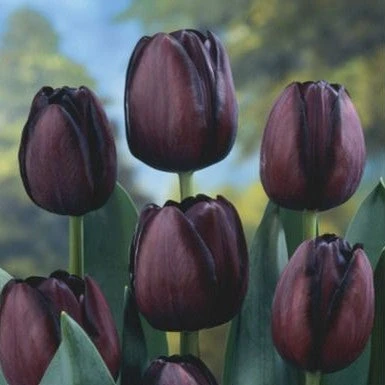
Tulip ‘Queen Of Night’ (Bulbs)
Original price was: £12.00.£8.40Current price is: £8.40.
- Freundlicher, effizienter Service, immer online.
- Die Qualitätswahl für Smart Shopper
- Kaufen Sie die beste Qualität online
- Sicheres Einkaufen garantiert

Tulipa
Family
Liliaceae
Origin
Asia
Description
Tulips (Tulipa) form a genus of spring-blooming perennial herbaceous bulbiferous geophytes (having bulbs as storage organs). The flowers are usually large, showy and brightly coloured, generally red, pink, yellow, or white (usually in warm colours). They often have a different coloured blotch at the base of the tepals (petals and sepals, collectively),.
Tulip ‘Queen of Night’ is distinguished by its deep maroon-black, velvety blooms that bring a unique elegance to any spring garden. This notable mid-season variety flowers from January to February in the plains and from February to March in mountainous regions. For best results, plant pre-chilled bulbs during November to December in the plains or October to November in the hills.
Environment
Tulips thrive best in locations with full or afternoon sun. The soil should be well-draining, fertile, and neutral to slightly acidic, ideally dry or sandy, as tulips do not tolerate excessive moisture. Tall varieties require protection from strong winds.
Space the bulbs 4 to 6 inches apart, ensuring a sufficiently large planting area. Plant bulbs in the fall, about 6 to 8 weeks before a hard frost—typically November or December in India—when soil temperatures drop below 60°F. In mild winters, bulbs should be refrigerated for around 12 weeks before planting.
Plant bulbs at least 8 inches deep, with the pointed end facing upward, loosening soil for drainage or using raised beds if necessary. After planting, water thoroughly to stimulate growth and apply NPK 10:10:10 fortnightly or organic compost to support development.
Landscape Use
Tulips make wonderful specimens and very attractive to fit into formal garden plantings from beds to borders
| Pack | 2 |
|---|---|
| Colour | Dark Maroon |
Be the first to review “Tulip ‘Queen Of Night’ (Bulbs)”
Related products


Home Decor


Home Decor


Home Decor
Wonderland Sleeping Gnome On Hammock Garden Decor, Home Decor, Hanging Gnome, Hanging Decor



Home Decor


Reviews
There are no reviews yet.