
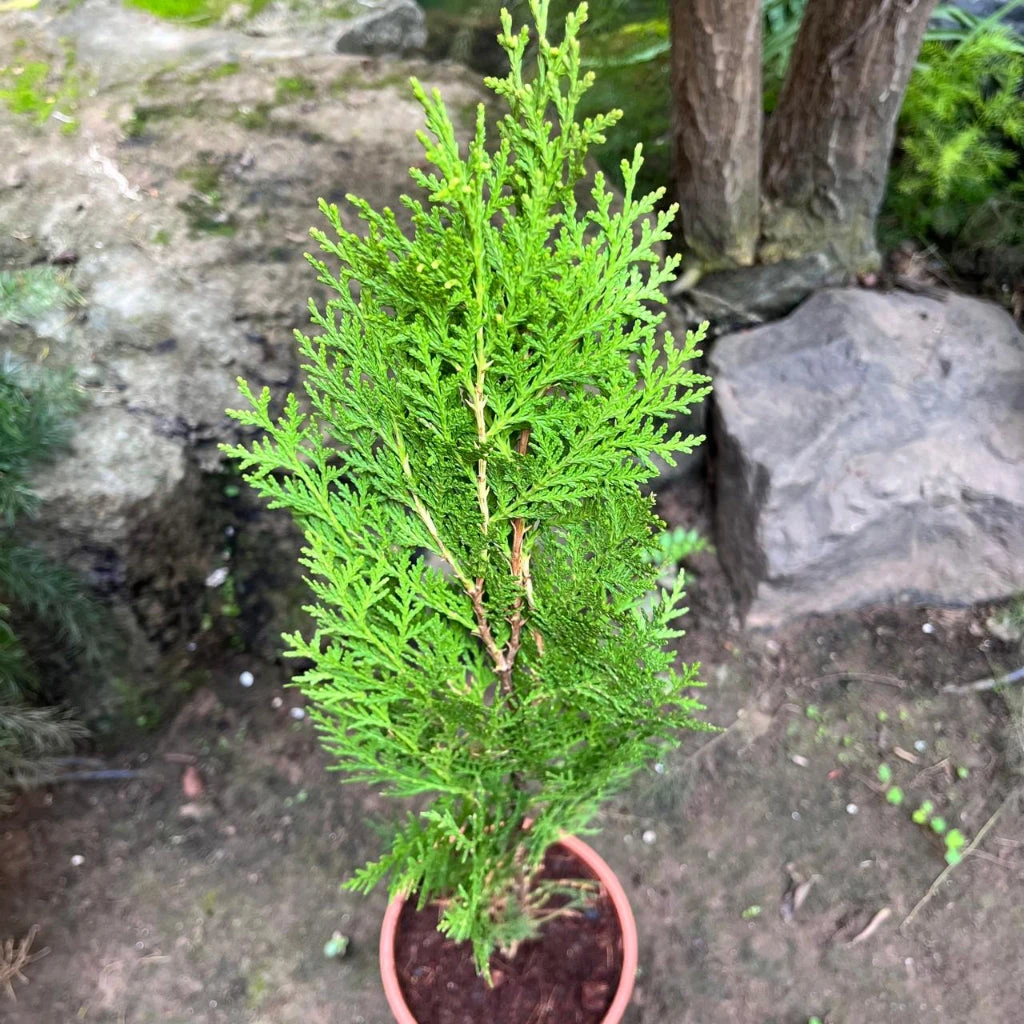
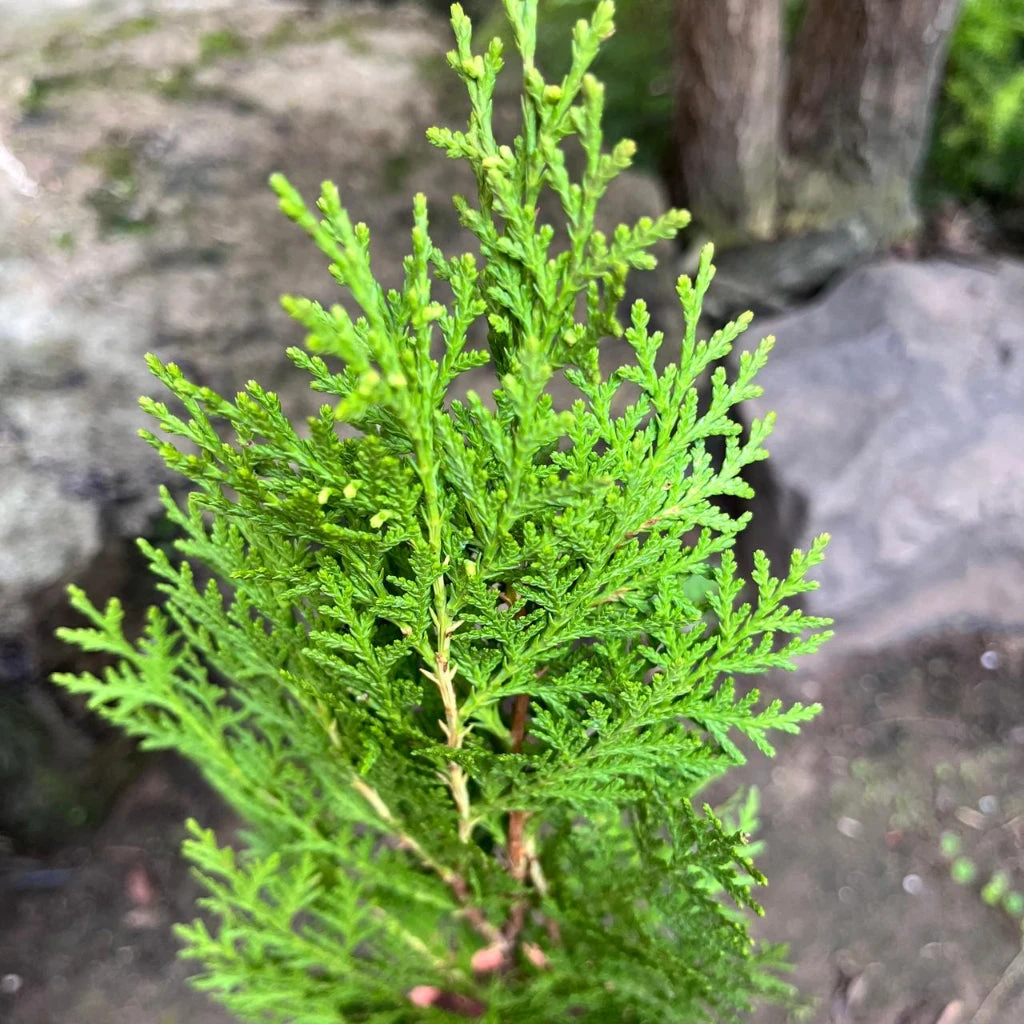
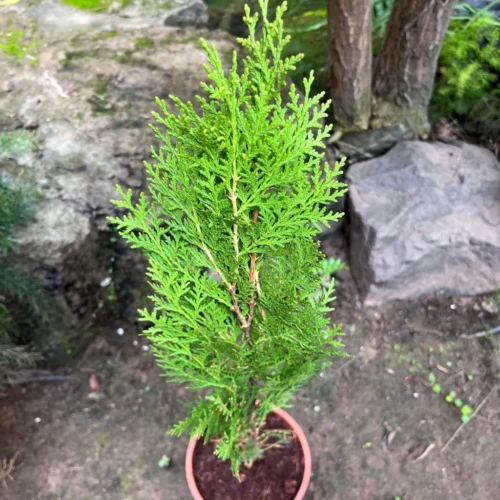

Morepankhi Plant (Oriental Thuja) – Evergreen Ornamental, Vastu Plant & Natural Air Purifier
Original price was: £12.00.£8.40Current price is: £8.40.
- Freundlicher, effizienter Service, immer online.
- Die Qualitätswahl für Smart Shopper
- Kaufen Sie die beste Qualität online
- Sicheres Einkaufen garantiert

Morepankhi Plant (Oriental Thuja) – For Beauty, Purity & Positive Energy
Family
Cupressaceae
Origin
Northwestern China
Description
Mayurpankhi, also known as Oriental Thuja, is a versatile evergreen coniferous shrub or small tree commonly grown for decorative use. It features dense, scale-like leaves that shift from vibrant green in spring to a richer green in winter, occasionally displaying golden highlights.
The Morepankhi Plant (Oriental Thuja) develops subtle, small yellowish to light green flowers in spring, hidden within its foliage. These flowers progress into small, green cones that later become hard and brown. Outdoors, the plant can reach heights of 3 to 5 meters, while it remains more compact when grown in pots.
This ancient conifer has been a staple in temple gardens and courtyards across China for over a millennium. Beyond its ornamental appeal, it acts as a natural air purifier and plays a role in balancing energies according to Vastu principles. Revered in Indian culture for its spiritual significance, it is thought to attract good fortune, wealth, and prosperity, making it a popular choice for placement near entrances or in the northern areas of homes.
Environment
Thuja thrives in full sun to partial shade, requiring at least 4–6 hours of direct sunlight daily.
Grows best in well-drained soils, including sandy, loamy, or slightly clay textures, with a pH between 6.0 and 8.0 (neutral to slightly alkaline).
Water thoroughly but sparingly, allowing the top 2–3 cm of soil to dry out before watering again. Newly planted specimens need consistent moisture until they become established. Prevent waterlogging to avoid root damage.
Apply a balanced slow-release fertilizer in early spring, avoiding excess to prevent fragile growth.
Perform light pruning in spring or early summer to shape the plant and remove any dead or damaged branches as needed.
Landscape Use
It is often grown as a hedge, topiary, or container plant because of its compact growth and tolerance to pruning.
Be the first to review “Morepankhi Plant (Oriental Thuja) – Evergreen Ornamental, Vastu Plant & Natural Air Purifier”
Related products

Home Decor

Flowering Plants

Foliage

Foliage


Bonsai

Home Decor
Reviews
There are no reviews yet.