
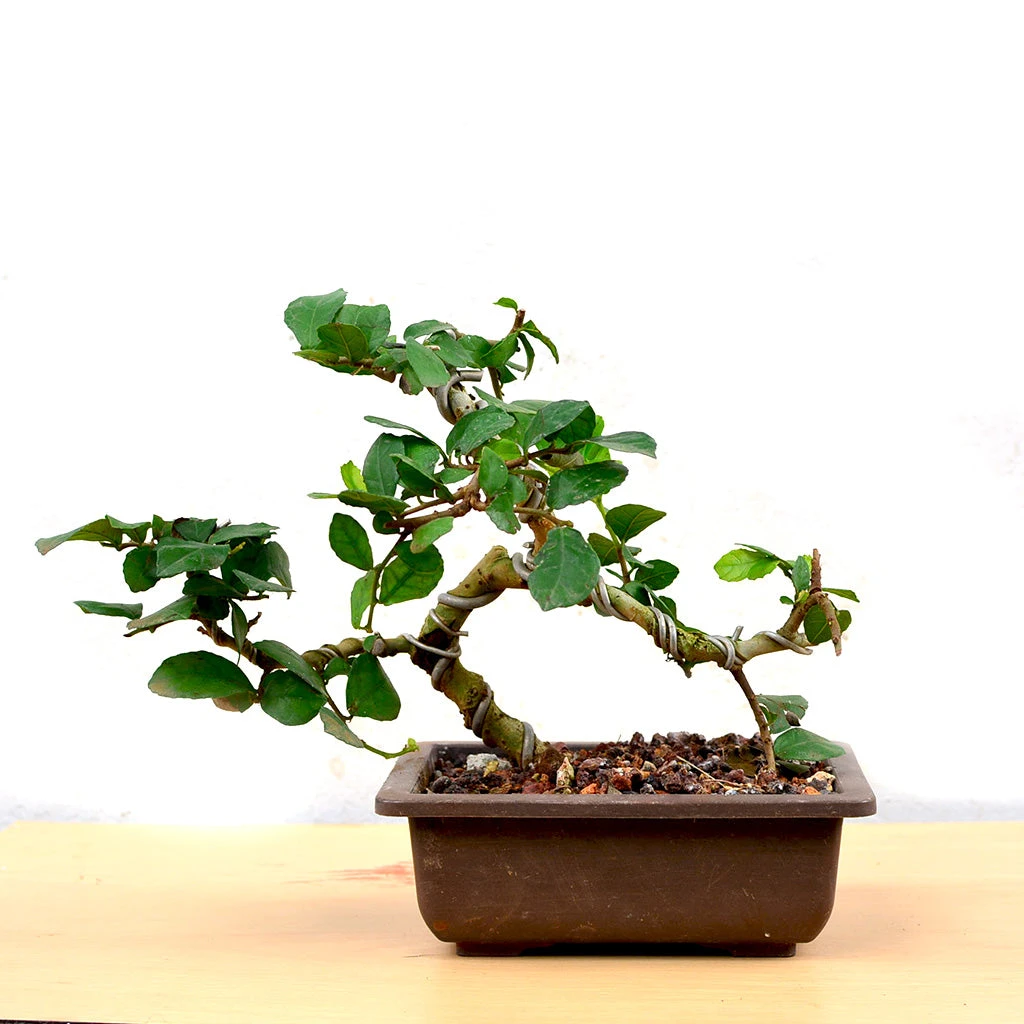
Bonsai Sandpaper Plant
Original price was: £27.93.£19.55Current price is: £19.55.
- Freundlicher, effizienter Service, immer online.
- Die Qualitätswahl für Smart Shopper
- Kaufen Sie die beste Qualität online
- Sicheres Einkaufen garantiert

Ficus coronata
Family
Moraceae
Origin
South East Asia
Description
The Bonsai Ficus coronata, commonly known as the Sandpaper Fig, is a distinctive and hardy fig species recognized for its rough, sandpaper-textured leaves and unique bark. Valued for its robust form and textured foliage, this bonsai thrives in tropical and semi-tropical environments.
It shapes naturally into an artistic bonsai, responds well to pruning, and can develop striking aerial roots. Although it lacks ornamental flowers, it occasionally produces small, edible purple figs, adding seasonal interest. Its coarse leaves and durability make it ideal for both novice enthusiasts and seasoned collectors. The tree typically remains smaller than its natural 6–12 m height, featuring dark brown trunks and hairy new growth.
The Sandpaper Bonsai is distinguished by its textured, coarse leaves and compact form. It features seasonal bursts of small white flowers, serving as a striking centerpiece in any miniature bonsai collection.
Specifications
Age : 2.5 – 3 Years
Size (Approx) : L X W X H : 5.5″ x 4″ x 6″
Note : The plant might differ a little than the picture as each Bonsai is created differently.
Environment
In their natural environment, most ficus bonsai trees develop aerial roots, which are often showcased in striking bonsai designs featuring multiple root pillars or roots growing over rocks. To encourage aerial root growth indoors, it is necessary to maintain nearly 100% humidity artificially. This can be achieved using a glass cover, aquarium, or a structure made from transparent sheets. Aerial roots extend vertically from the branches and, upon reaching the soil, transform into sturdy, pillar-like trunks. In tropical regions, a single ficus can expand into a forest-like formation, covering a vast area.
Be the first to review “Bonsai Sandpaper Plant”
Related products

Home Decor

Home Decor


Home Decor
Reviews
There are no reviews yet.