

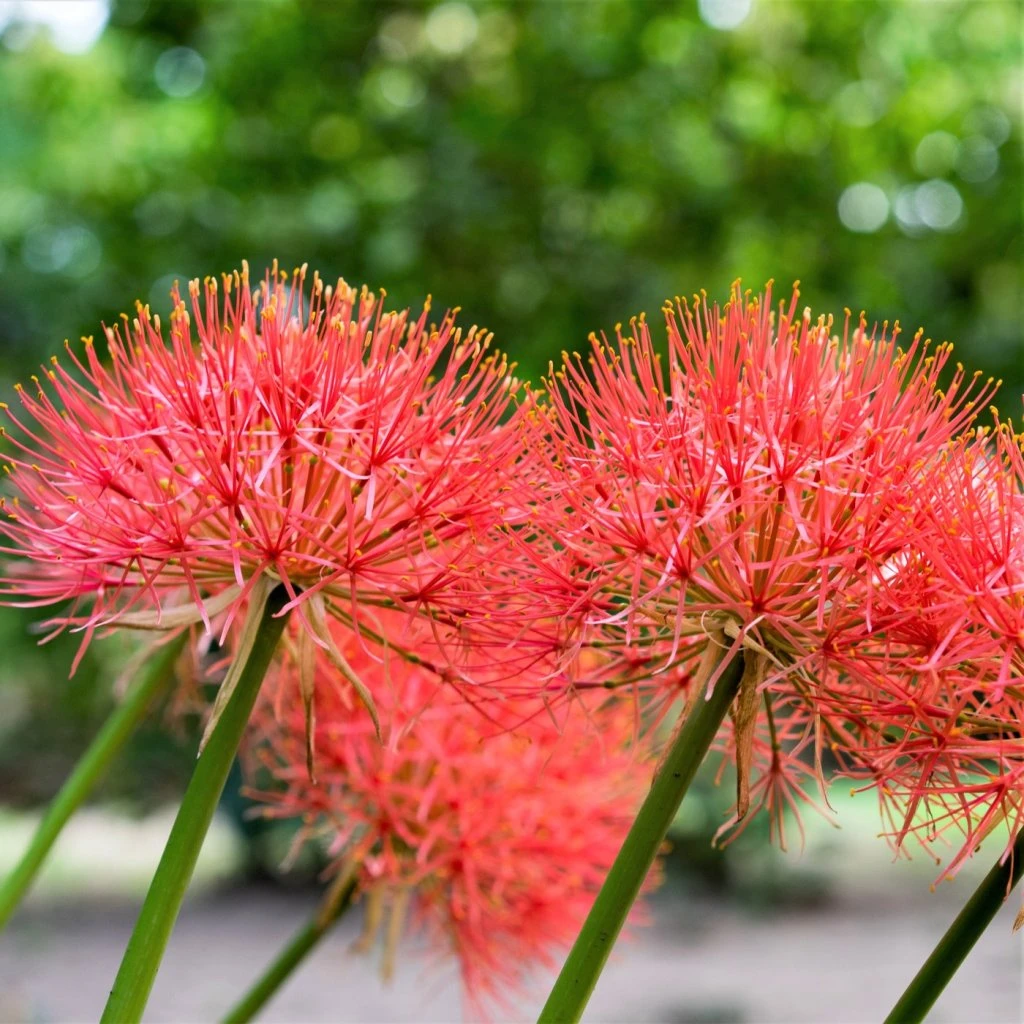


African Blood Lily (Bulbs)
Original price was: £12.00.£8.40Current price is: £8.40.
- Freundlicher, effizienter Service, immer online.
- Die Qualitätswahl für Smart Shopper
- Kaufen Sie die beste Qualität online
- Sicheres Einkaufen garantiert

Haemanthus Multiflorus
Family
Amaryllidaceae
Origin
Tropical & Southern Africa, Yemen
Description
Haemanthus multiflorus, commonly called blood lily, is a bulbous perennial. Each bulb produces 6-7 bright green leaves (to 12-15 long) and one flower head per season. Leaves of Haemanthus are spirally arranged. Mature plants have one, two, four or rarely six leathery, fleshy strap-like, leaves, upright or pressed flat on the ground.
The African Blood Lily showcases striking spherical clusters of vivid red blooms. It flowers from April to June in the plains and from May to July in the hills. For a bold summer presentation, plant bulbs between February and April in plains or March to May in hilly areas.
Environment
The African Blood Lily (Haemanthus) thrives best in bright, indirect light. It can handle gentle morning or late afternoon sun but should be protected from intense midday sunlight, particularly in warmer regions.
Haemanthus bulbs are adaptable to various soil types but thrive best in light, well-draining soil. An optimal soil mix consists of 40% garden soil, 30% compost or vermicompost, and 30% sand or perlite. Plant bulbs in deep pots with adequate drainage, ensuring that one-third of the bulb remains above the soil surface. Repotting is recommended every 2 to 3 years after the plant’s dormancy period.
During the active growth phase from spring to monsoon, water the African Blood Lily moderately, allowing the top inch of soil to dry out between watering. In the dormancy period, from late autumn to winter, significantly reduce watering and keep the soil predominantly dry.
Apply a fertilizer high in phosphorus and low in nitrogen every 15 to 20 days throughout the active growth period. Cease fertilization once the plant enters dormancy.
Post-flowering, allow the leaves to mature completely as they restore the bulb’s energy. Once the foliage yellows and withers, discontinue watering and let the bulbs enter a dormancy period lasting 2 to 3 months..
Landscape Use
Best planted in mass for border plantings, a line along a walkway, decorate fence and around an ornamental tree.
Caution
All parts of the plant are poisonous …
| Pack | 5 |
|---|
Be the first to review “African Blood Lily (Bulbs)”
Related products

Home Decor

Home Decor

Home Decor


Home Decor



Home Decor
Home Decor

Home Decor
Reviews
There are no reviews yet.